Water pumping is a wonderful use for alternative power technology. Even if your ranch house is powered by conventional power from the grid, what about getting water to your cattle on the back 40? Windmills have been used for over 100 years for this purpose, but other alternative power methods are effective too. Really, ANYTHING is better than pumping water by hand, but gas powered generators are the worst of the bunch.
First, a word about your well pump. The standard well pump your well drilling company will install is usually a 220 volt AC model. If they tell you, "don't worry, your solar system will run this just fine if you add a 220 volt transformer," DON'T believe them! This has been a big problem with a certain well pump company in our area. Standard 220 well pumps are very inefficient, and the required 220 transformer wastes lots of power. A huge Trace 2500 watt inverter can only sometimes power one of these behemoths--even if the pump IS able to start, all your lights may dim every time the well pump kicks on, resulting in premature inverter failure. We recommend you avoid this sort of system if at all possible. The only solution if you have this sort of well pump is to run a generator to fill your cistern, or replace the pump with a variety suited to remote power. And if you have a remote power system, why be dependent on a gas powered generator for all your water? It will eventually leave you stranded without water, and usually at midnight when its 20 below zero outside. Spend an extra 1000 bucks on a 12 volt deep 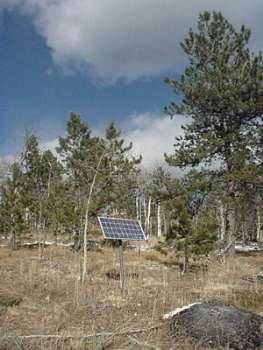 well pump or a super efficient 120 volt AC model. You can pump with your regular remote power system, your generator will last longer, and if it won't start when its 20 below zero, you still have water.
The single 75 watt solar panel shown here pumps water to my house from a shallow spring. It moves the water at 75 gallons per hour in full sun. The total lift to the house from the spring is 35 feet, the total horizontal distance is 480 feet. The pump is an inexpensive Shurflo pressure pump, controlled by a Photocomm controller and Linear Current Booster (LCB). There are float switches at the spring and at the cistern underneath the house. No batteries are used, but I installed jumper cable lugs at the pump so that I can hook up my truck battery to the pump for times of no sun (our cistern is only 150 gallons). This system has run for over a year now without any maintenance.
In any remote water pumping situation, avoid using batteries if AT ALL possible! Your water storage tank should be your battery--that is, your system should pump water fast enough and your cistern should be big enough that you can last through as many days of no sun or wind as necessary. Batteries are a waste of money and resources in a remote water pumping system, unless you are planning some sort of specialized application.
Home water pressure pumps--For pressurizing your tap water, the best choice is a 12 volt DC pressure pump. These are inexpensive, efficient and reliable, and the pressure settings for turning on and off are built-in. They cost from $40 to $200. 120 volt AC versions are very inefficient, using far more power than necessary.
Power for Water Pumping
- Solar--Solar technology is very well suited to pumping water, even more so than the traditional windmill. A typical system includes one or more solar panels, an efficient 12 volt DC pump, a controller (with float switches), and a "linear current booster" (more about this later). As long as it's daytime and the float switches show that the water source is not empty and the cistern in the house is not overflowing, the pump will run. The linear current booster allows the pump to run even if it's cloudy out.
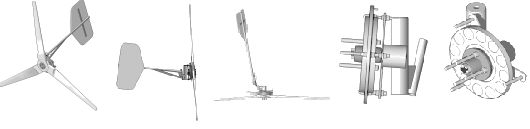
- Wind--The traditional windmill is still useful technology. The pump is directly coupled to the wind generator. The only problem comes if there is no wind for a few days at a time, and with maintenance. The leather seals on this sort of pump wear out and require replacement. The Bowjon windmill system uses pressurized air to pump water, and requires very little maintenance. It can also be used to generate power. Other systems have been built using an electric wind generator, linear current booster, and pump, as described in the Solar section above.
- Water--Yes, water can be used to pump water. The device involved is called a "water ram." It uses your local stream's water pressure to move a fraction of the total stream flow uphill--as much as 30 times the total fall. Water rams can be purchased, or built at home with PVC pipe and valves. Look for more information on this here in the future.
- Gasoline-- A waste of resources. Avoid it if possible.
- Hand Pumps--Better than not having water, if you have no resources available. Or if you can get your kids to do it. Different hand pumps are available commercially (my grandma had one), or pumps can be constructed than run on foot power instead of hand.
Linear Current Booster (LCB)--This device trades voltage for extra current to start a pump. Electric pumps take more power to start up than they take to run, and the LCB takes care of this problem. It will allow your pump to start and run even on cloudy days.